Bacopa and lion’s mane for memory: what the human trials actually show

Updated September 2026 · reviewed by the Crystal Restore Research Team. We are an independent information resource, not a medical provider, and this article is educational rather than medical advice.
Bacopa monnieri and lion’s mane mushroom are two of the most talked-about botanicals for memory and everyday mental clarity — and they are complementary. Bacopa is a slow-and-steady Ayurvedic memory herb; lion’s mane is a clarity-focused culinary mushroom. This guide explains what each one is, how it is thought to work in plain language, sensible dosing context, and what to look for. Neither is a treatment for any disease.
Bacopa and lion’s mane, side by side.
- Bacopa in a line
- An Ayurvedic herb rich in compounds called bacosides, traditionally used to support memory and learning.
- Lion’s mane in a line
- An edible mushroom used in East Asia and popular for everyday mental clarity and focus.
- Why pair them
- They cover different bases — memory and clarity — so together they suit a daily focus routine.
- Timeframe
- Both are gradual; bacopa in particular is usually taken daily for eight to twelve weeks, and results vary.
- Where to find both
- They are two of the nine botanicals in Crystal Restore’s once-daily liquid drop.
People often ask which of these two is “better.” The more useful framing is that they do different jobs. Below we take each in turn, then look at how they fit together — including inside Crystal Restore, where both appear among nine plant-based botanicals.
What is bacopa monnieri?
Bacopa monnieri is a small creeping herb that grows in wetlands, used in Ayurvedic tradition for centuries and often called brahmi. It is one of the most researched botanicals for cognition, valued traditionally for supporting memory, learning and a calm, steady kind of focus.
How bacopa is thought to work
Bacopa’s signature compounds are called bacosides. In traditional and general terms, they are associated with antioxidant activity and with supporting the health of the connections between brain cells. The key practical point is that bacopa is a slow herb: rather than an on-the-spot lift, its support is meant to build with daily use over weeks. That is why patience and consistency matter more than any single dose.
What the bacopa trials actually found
Bacopa is the rare botanical with a real body of randomised human evidence, and the fair summary is “a small effect on one narrow measure.” A systematic review of randomised, controlled human trials by Pase MP and colleagues in the Journal of Alternative and Complementary Medicine (2012) found that bacopa improved speed of attention but did not reliably improve memory across the trials it pooled. A larger meta-analysis two years later, Kongkeaw C et al., Journal of Ethnopharmacology (2014), reached the same cautious verdict: a measurable but modest effect on attention-related speed, and no dramatic memory boost.
The twelve-week figure people quote comes from the trials themselves. In Stough C et al., “The chronic effects of an extract of Bacopa monniera (Brahmi) on cognitive function in healthy human subjects,” Psychopharmacology (2001), the differences between bacopa and placebo appeared at the twelve-week assessment, not at five weeks. A later randomised, double-blind trial in older adults, Calabrese C et al., Journal of Alternative and Complementary Medicine (2008), used a standardised extract for twelve weeks and reported the same pattern — along with the practical detail that gastrointestinal upset was the most common complaint in the bacopa group.
What is lion’s mane mushroom?
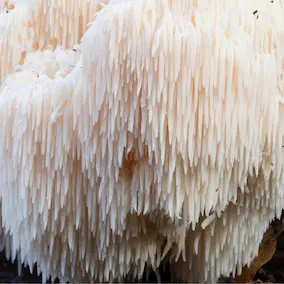
Lion’s mane (Hericium erinaceus) is a striking white, shaggy mushroom that grows on hardwood trees. It has been eaten and used in tonics across East Asia for generations, and in the last decade it has become a staple of modern nootropic blends thanks to its reputation for supporting everyday mental clarity.
How lion’s mane is thought to work
Lion’s mane contains compounds known as hericenones and erinacines, which are studied for their relationship to the body’s own nerve-support pathways — the laboratory and preclinical picture is reviewed in Szućko-Kociuba I et al., “Neurotrophic and neuroprotective effects of Hericium erinaceus,” International Journal of Molecular Sciences (2023). Almost all of that work is in cells and animals, not people, which is the honest caveat to attach to any lion’s mane claim.
The human evidence is much thinner than the marketing suggests. The study everyone cites is Mori K et al., “Improving effects of the mushroom Yamabushitake (Hericium erinaceus) on mild cognitive impairment: a double-blind placebo-controlled clinical trial,” Phytotherapy Research (2009) — thirty Japanese adults with diagnosed mild cognitive impairment, taking the mushroom in tablet form for sixteen weeks, whose scores drifted back toward baseline once they stopped. That is a genuine result, but it is not a study of healthy people looking for sharper focus. The closest thing to that is a small pilot in young adults, Docherty S et al., Nutrients (2023), which found faster performance on one processing-speed task and lower subjective stress, and which its own authors describe as preliminary.
| Bacopa monnieri | Lion’s mane | |
|---|---|---|
| Type | Ayurvedic herb | Culinary mushroom |
| Traditional focus | Memory & learning | Everyday clarity |
| Key compounds | Bacosides | Hericenones, erinacines |
| Onset | Gradual (weeks) | Gradual |
| Best used | Daily, with food | Daily, any time |
See both botanicals in Crystal Restore →
How do bacopa and lion’s mane work together?
Because they focus on different things — memory versus everyday clarity — bacopa and lion’s mane are natural partners in a single routine. Many blends pair them precisely for this reason, then add supporting botanicals such as ginkgo for circulation and antioxidant greens like chlorella and spirulina for general vitality. That is the logic behind a formula rather than a single herb: variety in one convenient step. If you want to see how these two compare with the rest of the family, our guide to the best nootropic herbs for brain health ranks all of them by how much human evidence actually sits behind each one — and ginkgo, the herb most often added alongside these two, is the clearest example of a famous botanical whose large trials came back negative.

Sensible dosing context and what to look for
Amounts vary by product and form, and a proprietary blend will not always list each botanical’s milligrams. What you can look for is transparency about which plants are included, sensible traditional amounts rather than mega-doses, quality manufacturing under Good Manufacturing Practices, and a clear guarantee. A liquid drop, like Crystal Restore, is simply a convenient delivery format — the same botanicals, taken as a once-daily drop instead of a capsule.
| Label check | Why it matters |
|---|---|
| Named botanicals | You can see that bacopa and lion’s mane are actually in the formula. |
| Sensible amounts | Traditional, everyday amounts beat unnecessary mega-doses. |
| GMP manufacturing | Made in a facility following Good Manufacturing Practices. |
| Money-back guarantee | Lets you try a gradual botanical routine with low risk. |
Bacopa & lion’s mane, in one drop
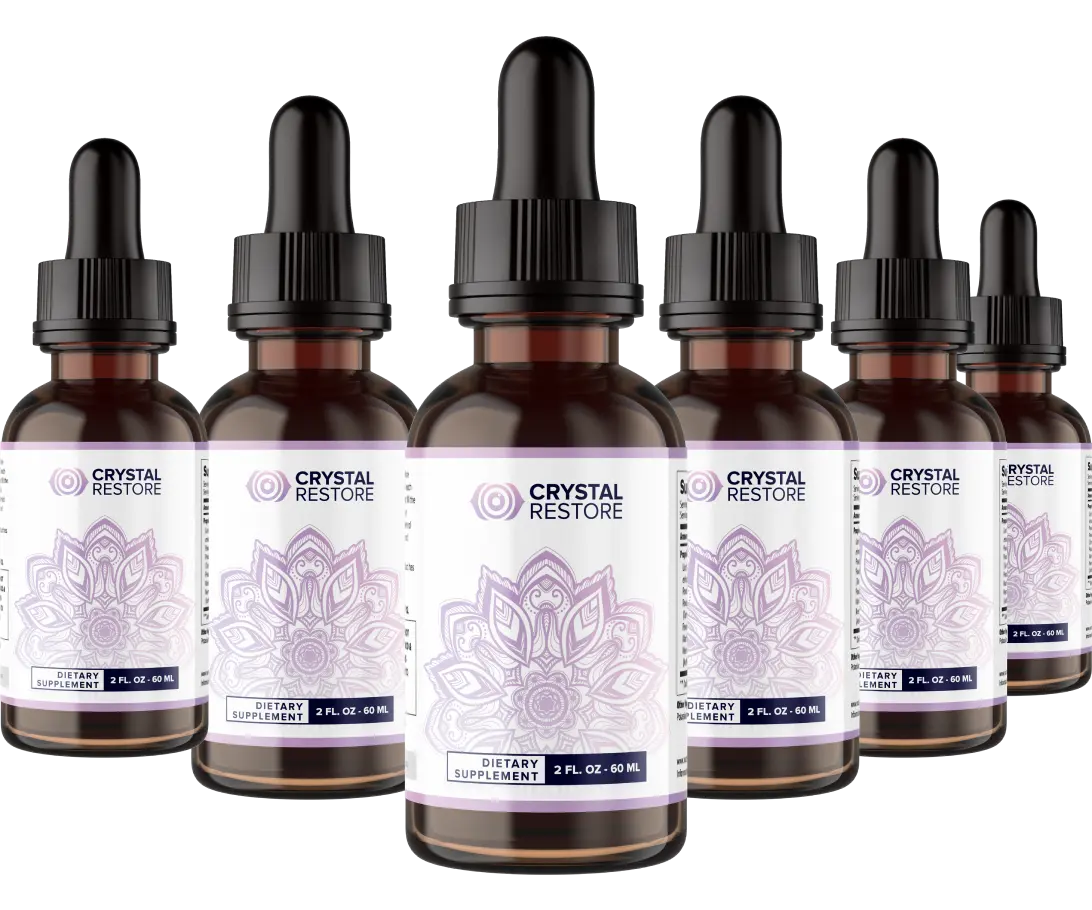
Crystal Restore combines both botanicals with seven more in a once-daily liquid drop. The six-bottle bundle is the best value at $49 per bottle, with free U.S. shipping and a 365-day guarantee.
Order Crystal Restore — from $49/bottleHow to use them well
Take your chosen product consistently, ideally at the same time each day, and give bacopa in particular a full eight to twelve weeks before deciding — that is the window in which the Stough and Calabrese trials saw their effects appear. Bacopa is gentlest taken with food, which is the simplest way to avoid the digestive upset those trials recorded.
Keep the fundamentals steady while you evaluate, because they do the bulk of the work: our companion guide on how to improve focus and mental clarity naturally walks through the sleep, daylight, food and movement habits that outperform any botanical, and it is also the reason a botanical trial is hard to read — a good week of sleep produces exactly the change people credit to a supplement. Short sleep alone measurably degrades attention and working memory, as quantified in Lim J and Dinges DF, “A meta-analysis of the impact of short-term sleep deprivation on cognitive variables,” Psychological Bulletin (2010).
One safety point deserves its own line. If a blend also contains ginkgo biloba, and you take an anticoagulant such as warfarin or have surgery scheduled, raise it with your doctor or pharmacist first — herbal interactions with warfarin are catalogued in Tan CSS et al., “Warfarin and food, herbal or dietary supplement interactions: a systematic review,” British Journal of Clinical Pharmacology (2021). And if you are pregnant or nursing, under 18, take medication, or have a medical condition, talk to your doctor before starting anything here.
Frequently asked questions
What is bacopa monnieri used for?
Bacopa monnieri is an Ayurvedic herb traditionally used to support memory, learning and calm focus. It is one of the most researched cognitive botanicals and is usually taken daily for several weeks before its support is judged.
What is lion’s mane mushroom used for?
Lion’s mane (Hericium erinaceus) is an edible mushroom traditionally used in East Asia and popular in modern nootropic blends for supporting everyday mental clarity and focus.
How do bacopa and lion’s mane work together?
They are complementary: bacopa is a slow-and-steady memory herb rich in compounds called bacosides, while lion’s mane is a clarity-focused mushroom. Using them together covers memory and everyday focus in one routine.
How long do bacopa and lion’s mane take to work?
Both are gradual. Bacopa in particular is typically taken daily for eight to twelve weeks before judging it, and individual results vary. Consistency matters more than any single dose.
Are bacopa and lion’s mane safe?
Both have long traditions of use and are generally well tolerated, though bacopa can cause mild digestive upset in some people if taken on an empty stomach. If you are pregnant, nursing, under 18 or take medication, consult your doctor first.
Are bacopa and lion’s mane in Crystal Restore?
Yes. Both are among the nine plant-based botanicals in Crystal Restore, alongside ginkgo biloba, pine bark, chlorella, spirulina, moringa, tamarind and neem, in a once-daily liquid drop.
Try Crystal Restore risk-free for 365 days →
Crystal Restore is a dietary supplement, not a treatment for any medical condition. These statements have not been evaluated by the Food and Drug Administration. This product is not intended to diagnose, treat, cure or prevent any disease. Always consult a qualified healthcare professional about your individual needs.
References & further reading
- Pase MP, Kean J, Sarris J, et al. The cognitive-enhancing effects of Bacopa monnieri: a systematic review of randomized, controlled human clinical trials. J Altern Complement Med. 2012;18(7):647–52. PMID 22747190
- Kongkeaw C, Dilokthornsakul P, Thanarangsarit P, et al. Meta-analysis of randomized controlled trials on cognitive effects of Bacopa monnieri extract. J Ethnopharmacol. 2014;151(1):528–35. PMID 24252493
- Stough C, Lloyd J, Clarke J, et al. The chronic effects of an extract of Bacopa monniera (Brahmi) on cognitive function in healthy human subjects. Psychopharmacology (Berl). 2001;156(4):481–4. PMID 11498727
- Calabrese C, Gregory WL, Leo M, et al. Effects of a standardized Bacopa monnieri extract on cognitive performance, anxiety, and depression in the elderly: a randomized, double-blind, placebo-controlled trial. J Altern Complement Med. 2008;14(6):707–13. PMID 18611150
- Mori K, Inatomi S, Ouchi K, et al. Improving effects of the mushroom Yamabushitake (Hericium erinaceus) on mild cognitive impairment: a double-blind placebo-controlled clinical trial. Phytother Res. 2009;23(3):367–72. PMID 18844328
- Docherty S, Doughty FL, Smith EF. The acute and chronic effects of lion’s mane mushroom supplementation on cognitive function, stress and mood in young adults. Nutrients. 2023;15(22):4842. PMID 38004235
- Szućko-Kociuba I, Trzeciak-Ryczek A, Kupnicka P, Chlubek D. Neurotrophic and neuroprotective effects of Hericium erinaceus. Int J Mol Sci. 2023;24(21):15960. PMID 37958943
- Lim J, Dinges DF. A meta-analysis of the impact of short-term sleep deprivation on cognitive variables. Psychol Bull. 2010;136(3):375–89. PMID 20438143
- Tan CSS, Lee SWH. Warfarin and food, herbal or dietary supplement interactions: a systematic review. Br J Clin Pharmacol. 2021;87(2):352–74. PMID 32478963
- National Center for Complementary and Integrative Health (NCCIH). Dietary and Herbal Supplements. nccih.nih.gov/health/dietary-and-herbal-supplements
These references describe the ingredients in general terms and do not constitute evidence that any product treats, cures or prevents any condition.
Keep reading: how to improve focus and mental clarity naturally · best nootropic herbs for brain health · back to the Crystal Restore blog · homepage.