Best nootropic herbs for brain health, ranked by the evidence behind them

Updated September 2026 · reviewed by the Crystal Restore Research Team. We are an independent information resource, not a medical provider, and this article is educational rather than medical advice.
The best nootropic herbs for brain health are the ones with long traditions of use and a sensible safety profile — plants such as bacopa monnieri, lion’s mane mushroom and ginkgo biloba, rounded out by antioxidant-rich greens. None is a magic pill; they are a support to sleep, nutrition and movement, and they are not a treatment for any disease. This guide walks through the best-known options in plain language.
The most popular nootropic herbs, at a glance.
- For memory
- Bacopa monnieri is the classic choice, used for centuries in Ayurveda to support memory and learning.
- For clarity
- Lion’s mane mushroom is a modern favourite for everyday mental clarity and focus.
- For circulation
- Ginkgo biloba is one of the most studied herbs for healthy circulation and cognition.
- For antioxidants
- Pine bark, chlorella and spirulina add naturally occurring antioxidants and micronutrients.
- Best approach
- Many people use a blend at sensible amounts, alongside good sleep, food and movement.
“Nootropic” simply means something used to support cognition. Long before the word existed, cultures around the world reached for particular plants to sharpen memory, steady focus and lift mental energy. Below are the herbs that show up most often in modern brain-health blends — including the nine inside Crystal Restore — and what each one traditionally brings.
What makes a herb a “nootropic”?
A nootropic herb is a plant traditionally used, or studied, for supporting some aspect of thinking — memory, attention, clarity, or mental stamina. The best-known ones tend to share three qualities: a long history of human use, a plausible mechanism (often antioxidant or circulatory), and a reasonable safety record at everyday amounts. That does not make any of them a drug or a cure; it makes them a botanical support to a healthy routine.
The best nootropic herbs, one by one
Bacopa monnieri — the strongest human evidence of the group
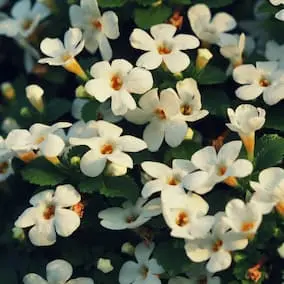
Sometimes called brahmi, bacopa is a creeping marsh herb used in Ayurvedic tradition for centuries and the only herb on this list with a genuine body of randomised human trials behind it. Those trials are consistent about one narrow thing and quiet about everything else: a systematic review by Pase MP et al., Journal of Alternative and Complementary Medicine (2012) found improvement in speed of attention but not a reliable memory boost, and the meta-analysis by Kongkeaw C et al., Journal of Ethnopharmacology (2014) agreed. It is a slow herb: the effects in those studies appeared at around twelve weeks of daily use, not in the first fortnight.
Lion’s mane mushroom — promising laboratory work, thin human data
A shaggy, white edible mushroom (Hericium erinaceus) used across East Asia, lion’s mane has become a modern staple in nootropic blends thanks to its reputation for supporting everyday mental clarity. The human record is a single small trial in older adults with mild cognitive impairment, Mori K et al., Phytotherapy Research (2009), plus a short pilot in healthy young adults, Docherty S et al., Nutrients (2023). The much-quoted nerve-growth-factor mechanism comes from cell and animal work reviewed in Szućko-Kociuba I et al., International Journal of Molecular Sciences (2023) — interesting, but not the same as a result in people.
Ginkgo biloba — the most studied, and the most disappointing
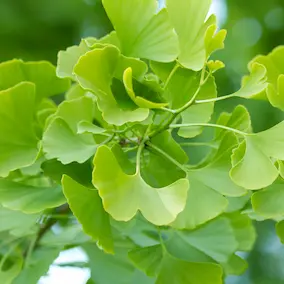
Ginkgo comes from a “living fossil” tree unchanged for millions of years, and it is by far the most heavily tested herb on this list. That is precisely why it belongs here as a caution rather than a recommendation. The Ginkgo Evaluation of Memory study followed more than three thousand older adults for years and found no reduction in dementia incidence — DeKosky ST et al., JAMA (2008) — and its companion analysis found no slowing of cognitive decline either, in Snitz BE et al., JAMA (2009). A Cochrane review of ginkgo for cognitive impairment and dementia, Wieland LS et al. (2026), reaches a similarly unconvinced conclusion. NCCIH summarises the same picture in plain language in its ginkgo fact sheet. If a blend leans on ginkgo as its headline evidence, that is a reason for scepticism, not confidence.
Pine bark extract — small studies, mostly on other outcomes
The bark of the maritime pine is a concentrated source of proanthocyanidin antioxidants. Its one well-known cognitive study is Ryan J et al., Journal of Psychopharmacology (2008), a small trial in older adults that reported better performance on some memory tasks alongside changes in oxidative-stress markers. Most of the rest of the pine bark literature measures inflammation, blood pressure or vascular markers rather than thinking — see the review by Nattagh-Eshtivani E et al., Phytotherapy Research (2022).
Chlorella & spirulina — nutrition, not cognition
These nutrient-dense algae are not nootropics in the classic sense, and it is more honest to describe them as food than as brain supplements. Spirulina’s antioxidant and anti-inflammatory chemistry is reviewed in Wu Q et al., Archives of Toxicology (2016), and a controlled human study of chlorella, Lee SH et al., Nutrition (2010), measured antioxidant status in blood — not memory or attention. In a brain-health blend they support overall everyday vitality, which underpins clear thinking, and that is as far as the evidence goes.
Moringa, tamarind & neem — traditional plants with no cognitive trials
Moringa leaf is prized as a nutrient-dense food crop, and its nutritional and antioxidant profile is catalogued in Dhakad AK et al., Phytotherapy Research (2019). Tamarind is a polyphenol-rich fruit whose laboratory antioxidant activity concentrates in the seed coat rather than the pulp, per Sandesh P et al., Journal of Food Science and Technology (2014). Neem is a foundational Ayurvedic botanical, mapped in Sharma A et al., Journal of Ethnopharmacology (2026), and traditionally used for purification rather than for thinking. None of the three has a human cognitive trial. They round out a plant-based formula; they do not carry it.
| Herb | Traditional focus | Type |
|---|---|---|
| Bacopa monnieri | Memory & learning | Ayurvedic herb |
| Lion’s mane | Everyday clarity | Culinary mushroom |
| Ginkgo biloba | Circulation & cognition | Tree-leaf extract |
| Pine bark | Antioxidant support | Bark extract |
| Chlorella & spirulina | Everyday vitality | Green algae |
| Moringa, tamarind, neem | Antioxidant nutrition | Traditional plants |
See the nine botanicals in Crystal Restore →
The evidence tiers, stated plainly
The most useful way to rank nootropic herbs is not by popularity but by how much human evidence sits behind each one. On that basis the list separates into three clear tiers, and most marketing copy quietly ignores the difference.
| Tier | Herbs | What exists |
|---|---|---|
| Randomised human trials | Bacopa monnieri, ginkgo biloba | Bacopa: small, consistent effect on attention speed at ~12 weeks. Ginkgo: large trials, largely negative for prevention. |
| Small or preliminary human data | Lion’s mane, pine bark extract | One or two small trials each, in narrow populations, with results the authors themselves call preliminary. |
| Nutritional or laboratory data only | Chlorella, spirulina, moringa, tamarind, neem | Antioxidant and nutrient literature, no human cognitive trials. |
Two things follow from that table. First, a longer ingredient list is not more evidence — nine plants with two studied ones is still two studied ones. Second, dose matters and is usually hidden: the bacopa trials used roughly 300 mg a day of a standardised extract, and a proprietary blend that does not publish per-ingredient amounts cannot be checked against that number. Whenever a label says “proprietary blend,” the honest reading is that the dose is unknown, not that it is adequate.
How to choose a nootropic herb (or blend)
With so many options, the practical question is not “which single herb is best?” but “which approach fits my routine?” A single herb lets you learn how your body responds to one thing at a time. A blend combines complementary botanicals — say, a memory herb, a clarity mushroom and an antioxidant green — so you get variety in one step. Whichever you choose, a few label checks help.
| What to look for | Why it matters |
|---|---|
| Named botanicals | You should be able to see exactly which plants are in the formula. |
| Sensible, everyday amounts | More is not always better; traditional amounts are the goal. |
| Quality manufacturing (GMP) | Made in a facility that follows Good Manufacturing Practices. |
| Non-GMO, plant-based | Cleaner sourcing suits most everyday routines. |
| Clear guarantee | A real money-back guarantee lets you try it with low risk. |
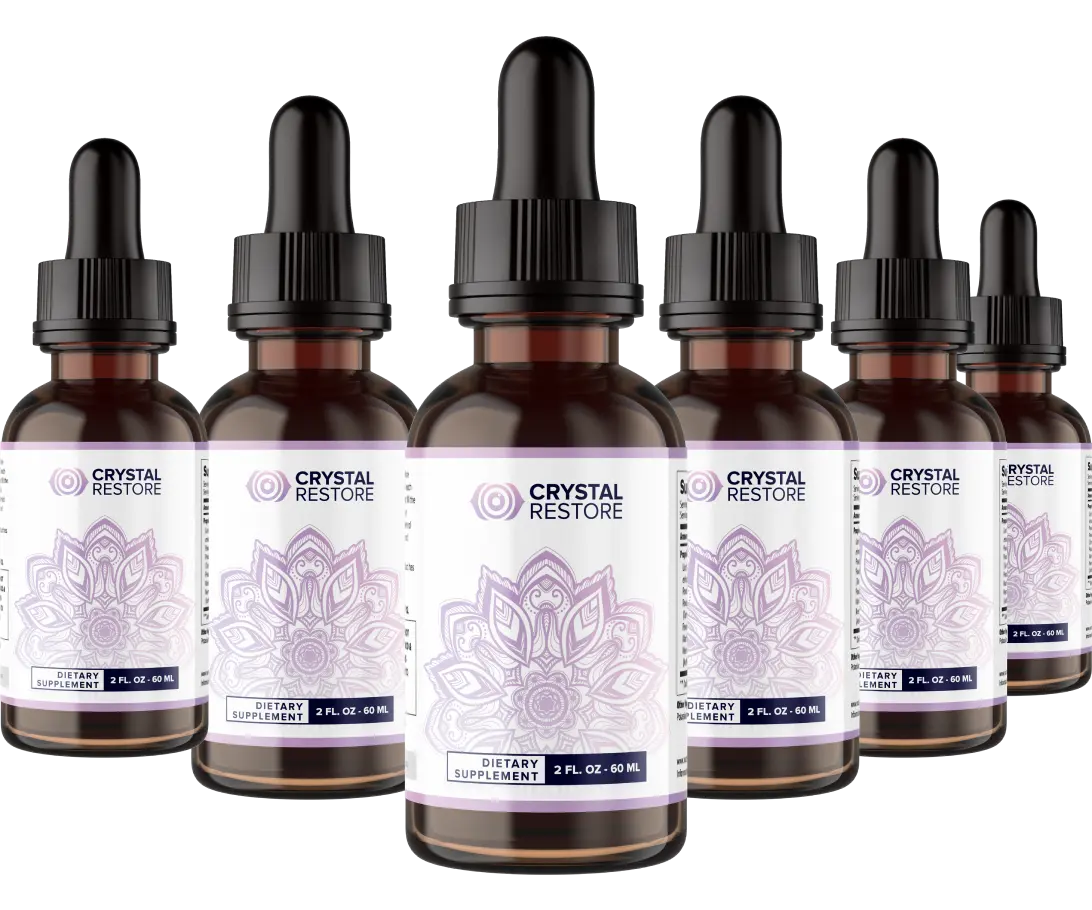
Crystal Restore was built as that kind of blend: a stimulant-free liquid drop combining bacopa, lion’s mane, ginkgo, pine bark and green superfoods, made in the USA in a GMP facility and backed by a 365-day guarantee. For the mechanism behind two of its headline herbs, read our deep dive on bacopa and lion’s mane for memory.
Nine botanicals in one daily drop
Crystal Restore combines the herbs above at sensible amounts. The six-bottle bundle is the best value at $49 per bottle, with free U.S. shipping and a 365-day guarantee.
Order Crystal Restore — from $49/bottleHow to use nootropic herbs safely
Start with one product at a time, take it consistently, and give it several weeks before you decide. Take botanicals at the same time each day so you do not forget, and pair them with the fundamentals that do most of the work — our guide to improving focus and mental clarity naturally covers the sleep, daylight, food and movement habits whose evidence base dwarfs anything on this page. Structured exercise, for instance, improved cognitive test scores in adults over 50 across dozens of randomised trials in Northey JM et al., British Journal of Sports Medicine (2018), which is a stronger result than any herb here can claim.
Two safety points are worth stating outright. Ginkgo is the ingredient in this family with a documented interaction concern: herbal interactions with warfarin are catalogued in Tan CSS and Lee SWH, British Journal of Clinical Pharmacology (2021), so if you take an anticoagulant or have surgery scheduled, ask your doctor or pharmacist before you start. And product quality is not guaranteed by a label — adulteration and mislabelling are a documented problem across the supplement market, as reported in Jagim AR et al., Frontiers in Sports and Active Living (2023), which is a good reason to buy from a manufacturer that stands behind its own product. If you are pregnant or nursing, under 18, take medication, or have a medical condition, talk to your doctor first.
Frequently asked questions
What is a nootropic herb?
A nootropic herb is a plant traditionally used, or studied, for supporting cognition — memory, focus, clarity or mental energy. Examples include bacopa monnieri, lion’s mane, ginkgo biloba and Rhodiola. They support healthy habits rather than treating any disease.
Which nootropic herb is best for focus?
There is no single best herb for everyone. Bacopa is a classic choice for memory and calm focus, lion’s mane is popular for everyday clarity, and ginkgo is valued for circulation. Many people use a blend so the botanicals complement one another.
Are nootropic herbs safe?
Well-known nootropic herbs have long traditions of use and are generally well tolerated, but they can interact with medication. If you are pregnant, nursing, under 18 or take prescription drugs, ask your doctor before starting any botanical supplement.
How long do nootropic herbs take to work?
Botanicals build their support gradually. Herbs like bacopa are usually taken daily for several weeks to a few months before judging them, and individual results vary.
Can I take more than one nootropic herb at once?
Yes, many blends combine complementary herbs — for example a memory herb, a clarity mushroom and an antioxidant green — at sensible amounts. A ready-made blend like Crystal Restore takes the guesswork out of pairing them.
Do nootropic herbs replace sleep and good food?
No. Sleep, daylight, whole-food nutrition and movement do the heavy lifting for brain health. Nootropic herbs are a support to those habits, not a substitute for them.
Try Crystal Restore risk-free for 365 days →
Crystal Restore is a dietary supplement, not a treatment for any medical condition. These statements have not been evaluated by the Food and Drug Administration. This product is not intended to diagnose, treat, cure or prevent any disease. Always consult a qualified healthcare professional about your individual needs.
References & further reading
- Pase MP, Kean J, Sarris J, et al. The cognitive-enhancing effects of Bacopa monnieri: a systematic review of randomized, controlled human clinical trials. J Altern Complement Med. 2012;18(7):647–52. PMID 22747190
- Kongkeaw C, Dilokthornsakul P, Thanarangsarit P, et al. Meta-analysis of randomized controlled trials on cognitive effects of Bacopa monnieri extract. J Ethnopharmacol. 2014;151(1):528–35. PMID 24252493
- Mori K, Inatomi S, Ouchi K, et al. Improving effects of the mushroom Yamabushitake (Hericium erinaceus) on mild cognitive impairment: a double-blind placebo-controlled clinical trial. Phytother Res. 2009;23(3):367–72. PMID 18844328
- Docherty S, Doughty FL, Smith EF. The acute and chronic effects of lion’s mane mushroom supplementation on cognitive function, stress and mood in young adults. Nutrients. 2023;15(22):4842. PMID 38004235
- Szućko-Kociuba I, Trzeciak-Ryczek A, Kupnicka P, Chlubek D. Neurotrophic and neuroprotective effects of Hericium erinaceus. Int J Mol Sci. 2023;24(21):15960. PMID 37958943
- DeKosky ST, Williamson JD, Fitzpatrick AL, et al. Ginkgo biloba for prevention of dementia: a randomized controlled trial. JAMA. 2008;300(19):2253–62. PMID 19017911
- Snitz BE, O’Meara ES, Carlson MC, et al. Ginkgo biloba for preventing cognitive decline in older adults: a randomized trial. JAMA. 2009;302(24):2663–70. PMID 20040554
- Wieland LS, et al. Ginkgo biloba for cognitive impairment and dementia. Cochrane Database Syst Rev. 2026. PMID 41641880
- Ryan J, Croft K, Mori T, et al. An examination of the effects of the antioxidant Pycnogenol on cognitive performance, serum lipid profile, endocrinological and oxidative stress biomarkers in an elderly population. J Psychopharmacol. 2008;22(5):553–62. PMID 18701642
- Nattagh-Eshtivani E, Gheflati A, Barghchi H, et al. The role of Pycnogenol in the control of inflammation and oxidative stress in chronic diseases: molecular aspects. Phytother Res. 2022;36(6):2352–74. PMID 35583807
- Wu Q, Liu L, Miron A, et al. The antioxidant, immunomodulatory, and anti-inflammatory activities of Spirulina: an overview. Arch Toxicol. 2016;90(8):1817–40. PMID 27259333
- Lee SH, Kang HJ, Lee HJ, et al. Six-week supplementation with Chlorella has favorable impact on antioxidant status in Korean male smokers. Nutrition. 2010;26(2):175–83. PMID 19660910
- Dhakad AK, Ikram M, Sharma S, et al. Biological, nutritional, and therapeutic significance of Moringa oleifera Lam. Phytother Res. 2019;33(11):2870–903. PMID 31453658
- Sandesh P, Velu V, Singh RP. Antioxidant activities of tamarind (Tamarindus indica) seed coat extracts using in vitro and in vivo models. J Food Sci Technol. 2014;51(9):1965–73. PMID 25190852
- Sharma A, et al. Ethnopharmacological landscape of Azadirachta indica (Neem): phytochemical diversity bridging traditional heritage and modern medicine. J Ethnopharmacol. 2026. PMID 42320775
- Northey JM, Cherbuin N, Pumpa KL, et al. Exercise interventions for cognitive function in adults older than 50: a systematic review with meta-analysis. Br J Sports Med. 2018;52(3):154–60. PMID 28438770
- Tan CSS, Lee SWH. Warfarin and food, herbal or dietary supplement interactions: a systematic review. Br J Clin Pharmacol. 2021;87(2):352–74. PMID 32478963
- Jagim AR, Harty PS, Erickson JL, et al. Prevalence of adulteration in dietary supplements and recommendations for safe supplement practices in sport. Front Sports Act Living. 2023;5:1239121. PMID 37841887
- National Center for Complementary and Integrative Health (NCCIH). Ginkgo. nccih.nih.gov/health/ginkgo
These references describe the ingredients in general terms and do not constitute evidence that any product treats, cures or prevents any condition.
Keep reading: how to improve focus and mental clarity naturally · bacopa & lion’s mane for memory · back to the Crystal Restore blog · homepage.