How to improve focus and mental clarity naturally, habit by habit

Updated September 2026 · reviewed by the Crystal Restore Research Team. We are an independent information resource, not a medical provider, and this article is educational rather than medical advice.
To improve focus and mental clarity naturally means using everyday sleep, light, food, movement and stress habits — and, if you choose, well-studied nootropic botanicals like bacopa and lion’s mane — to help your mind concentrate more easily and stay steadier through the day. It is about consistency over quick fixes, and it works alongside, not instead of, the guidance of your doctor.
The fastest route to a clearer, steadier mind, in one place.
- The goal
- Reduce the mental fog and scattered attention that follow poor sleep, constant task-switching and ultra-processed meals.
- Biggest levers
- Sleep and daylight matter most, followed by whole-food nutrition, regular movement and single-tasking.
- Quick win
- Ten minutes of morning daylight plus a short walk can lift alertness the same day.
- Where botanicals fit
- Nootropic herbs such as bacopa, lion’s mane and ginkgo can support the routine, but they are not a treatment for any disease.
- Timeframe
- Sleep and light habits help within days; diet, fitness and botanicals build over several weeks, and results vary.
If you have ever re-read the same sentence three times or lost your train of thought mid-task, you have felt focus slip. For most people the aim is simply a clearer, steadier mind, and the levers with the most influence are the ordinary ones. This guide walks through them in plain language and shows where a nootropic formula like Crystal Restore can play a supporting role.

What does mental clarity actually mean?
Mental clarity is the everyday experience of thinking without friction: you can hold a thought, follow a task to its end, and switch between them without feeling foggy or overwhelmed. It is not about being a genius on demand; it is about your brain doing its ordinary work smoothly. Two ideas anchor everything below: consistency beats intensity, and these habits stack — each helps a little, and together they help a lot.
Why does focus slip in the first place?
Attention is a limited resource, and modern life spends it fast. Short sleep leaves the brain running on a deficit. Bright evening screens push back the body clock, so mornings start groggy. A day of constant notifications trains the mind to jump every few seconds, which makes sustained concentration feel unnatural. And meals heavy on refined carbohydrates deliver a sugar rush followed by an energy dip that lands right in the middle of the afternoon.
None of these is a disease — they are ordinary inputs, and each is something you can nudge in the other direction. Below are the habits with the most leverage, roughly in order of impact.
What are the most effective everyday habits?
1. Protect your sleep first
Sleep is the single largest lever on day-to-day focus, and the evidence for it is far stronger than the evidence for anything you can swallow. A meta-analysis of controlled sleep-restriction experiments, Lim J and Dinges DF, “A meta-analysis of the impact of short-term sleep deprivation on cognitive variables,” Psychological Bulletin (2010), found that even short-term sleep loss measurably degrades attention and working memory, with sustained attention hit hardest. The broader picture — which functions fail first, and how fast — is set out in Killgore WDS, “Effects of sleep deprivation on cognition,” Progress in Brain Research (2010).
Practically: aim for seven to nine hours on a consistent schedule, keep the bedroom cool and dark, and give yourself a genuine wind-down. If you change only one thing this week, make it a steady bedtime.
2. Get morning light, cut evening light
Light is the signal your body clock actually reads, and getting it at the right time of day changes both alertness now and sleep later. A consensus paper by circadian researchers, Brown TM et al., “Recommendations for daytime, evening, and nighttime indoor light exposure to best support physiology, sleep, and wakefulness in healthy adults,” PLOS Biology (2022), sets out how much light to seek during the day and how little to accept in the evening. In a workplace trial, Viola AU et al., Scandinavian Journal of Work, Environment & Health (2008), brighter blue-enriched office light improved self-reported alertness, performance and sleep quality over four weeks.
The evening half matters just as much. In Cajochen C et al., “Evening exposure to a light-emitting diodes (LED)-backlit computer screen affects circadian physiology and cognitive performance,” Journal of Applied Physiology (2011), five hours in front of a bright LED screen suppressed melatonin and left participants more alert at exactly the hour they should have been winding down. Ten to twenty minutes of outdoor light within an hour of waking, and dimmer light after dark, is the whole habit.
3. Feed your brain whole foods — and drink water
The brain is metabolically hungry, and steadier blood sugar means steadier attention. Build meals around protein, fibre and healthy fats, and lean on whole foods over ultra-processed ones. The most specific dietary finding worth knowing is unglamorous: in a prospective cohort followed for around five years, Morris MC et al., “Nutrients and bioactives in green leafy vegetables and cognitive decline,” Neurology (2018), people eating roughly one serving of leafy greens a day declined more slowly on cognitive testing than those eating almost none.
Hydration is the other easy win, and it is more consequential than it sounds: a systematic review and meta-analysis, Goodman SPJ et al., “The effect of active hypohydration on cognitive function,” Physiology & Behavior (2019), found measurable decrements in attention and executive function once body-water losses reach a couple of per cent — the level you can hit on an ordinary busy day without noticing.
4. Move your body
Exercise has better evidence behind it than any supplement discussed on this site. A systematic review with meta-analysis of randomised trials, Northey JM et al., “Exercise interventions for cognitive function in adults older than 50,” British Journal of Sports Medicine (2018), found that both aerobic and resistance training improved cognitive test scores, with sessions of moderate intensity lasting 45 to 60 minutes doing the work. The shorter-term effects — the lift in mood and attention that follows a single session — are reviewed in Basso JC and Suzuki WA, Brain Plasticity (2017).
You do not need a gym: a brisk daily walk, a bike ride, gardening or a few bodyweight moves all count. A short walk after lunch is a simple way to beat the afternoon slump before it starts.
5. Single-task and take real breaks
Multitasking is mostly rapid task-switching, and every switch carries a small cost in attention. Work in focused blocks — many people like twenty-five to fifty minutes — then take a genuine break away from the screen. Attention also responds to deliberate training: in a randomised trial, Ziegler DA et al., “Closed-loop digital meditation improves sustained attention in young adults,” Nature Human Behaviour (2019), six weeks of short daily focused-breathing sessions improved sustained attention on objective testing.
If you are reaching for a supplement to solve a focus problem, it is worth reading our companion guide to the best nootropic herbs for brain health first — it ranks the common botanicals by how much human evidence each one actually has, and the answer for most of them is “less than the marketing implies.”
| Habit | Typical time to notice | Everyday effort |
|---|---|---|
| Morning daylight | Same day | Low |
| Short walk after meals | Same day | Low |
| Single-tasking & fewer alerts | Days | Low |
| Whole-food, steadier-sugar meals | Days to weeks | Medium |
| Consistent seven-to-nine-hour sleep | Weeks | Medium |
| Regular exercise routine | Weeks to months | Higher |
See how Crystal Restore fits your routine →
Where do nootropic botanicals fit?
Botanicals sit at the bottom of this list on purpose: they are a supplement to the habits above, not a substitute, and never a treatment for any condition. The honest ranking is that bacopa monnieri has the best human evidence of the common nootropic herbs — a small, consistent effect on speed of attention after about twelve weeks in Pase MP et al., Journal of Alternative and Complementary Medicine (2012) — while lion’s mane rests on one small trial in adults with mild cognitive impairment, Mori K et al., Phytotherapy Research (2009), and ginkgo’s two largest trials found nothing for prevention at all, in DeKosky ST et al., JAMA (2008). Here is a snapshot of the best-known ones, several of which appear in Crystal Restore.

| Botanical | Why it is discussed | Traditional / general role |
|---|---|---|
| Bacopa monnieri | Ayurvedic herb | Long used to support memory, learning and calm focus. |
| Lion’s mane | Cognitive mushroom | Popular in modern nootropic blends for everyday mental clarity. |
| Ginkgo biloba | Circulation botanical | Valued for supporting healthy circulation and cognition. |
| Pine bark | Antioxidant source | Rich in proanthocyanidin antioxidants used in wellness formulas. |
| Chlorella & spirulina | Green superfoods | Nutrient-dense algae used for antioxidant, everyday vitality. |
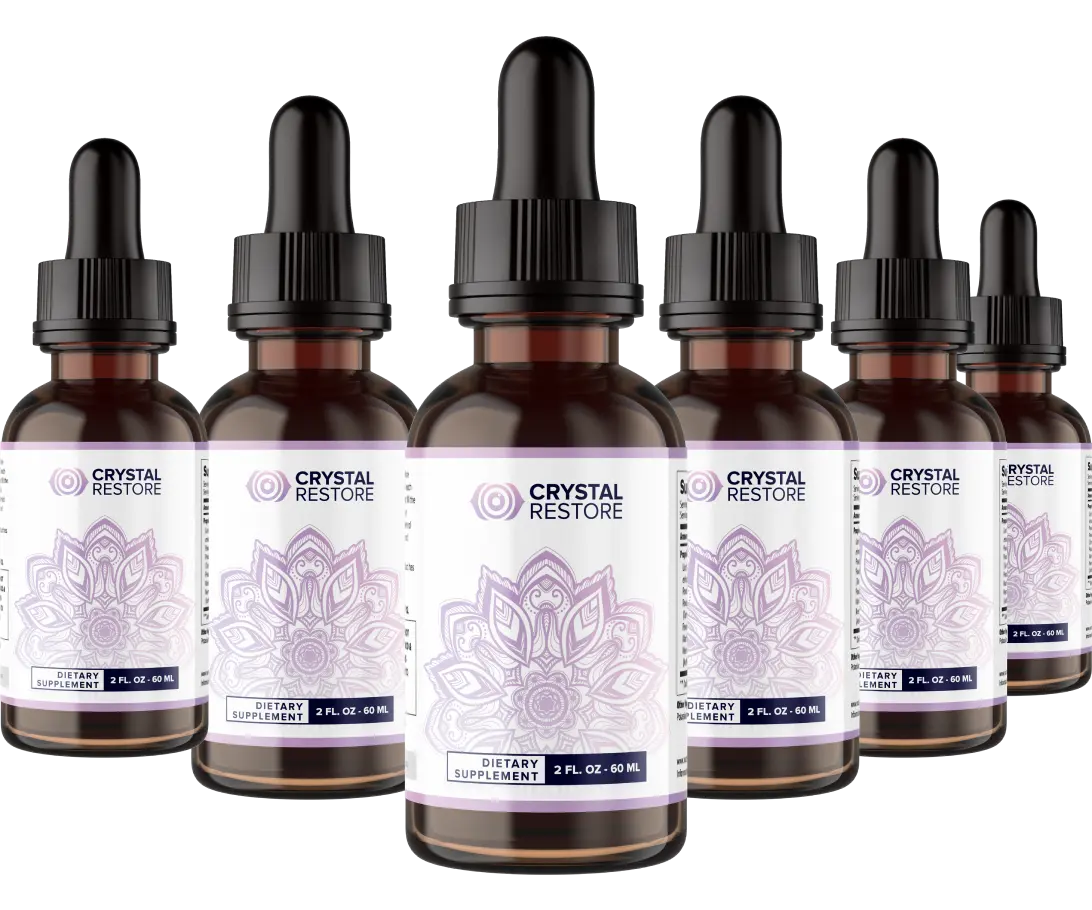
Crystal Restore brings these together: a stimulant-free liquid drop combining nine plant-based botanicals — bacopa, lion’s mane, ginkgo, pine bark, chlorella, spirulina, moringa, tamarind and neem. For a closer look, read our guide to the best nootropic herbs for brain health, or the deep dive on bacopa and lion’s mane for memory.
Make it a daily habit
Crystal Restore is a once-daily drop pairing nine nootropic and antioxidant botanicals. The six-bottle bundle is the best value at $49 per bottle, with free U.S. shipping and a 365-day guarantee.
Order Crystal Restore — from $49/bottleHow do you build a simple daily focus routine?
The best routine is the one you will keep. Rather than overhauling everything at once, stack one small habit at a time until each feels automatic:
- Get outside for morning light within an hour of waking.
- Anchor breakfast in protein and fibre so the morning starts steady.
- Work in focused blocks with notifications silenced.
- Take a 10-minute walk after your largest meal.
- Protect a consistent bedtime so sleep does the quiet work.
- Take any supplement at the same time daily — for Crystal Restore, one drop each morning, shaken and swallowed.
When should you talk to a doctor?
Natural habits are for supporting everyday focus and clarity; they are not a replacement for medical care. Speak with your doctor if you are pregnant or nursing, under 18, take any medication, have a diagnosed condition, or notice persistent symptoms such as ongoing brain fog, memory changes, low mood or fatigue that does not lift. A quick conversation ensures anything you add fits safely with your care.
Frequently asked questions
What does it mean to improve focus naturally?
It means using everyday sleep, light, food, movement and stress habits — and, optionally, well-studied nootropic botanicals like bacopa and lion’s mane — to help your mind concentrate more easily. It supports, rather than replaces, medical care.
Which habits improve focus the fastest?
A short walk, a few minutes of morning daylight and single-tasking can help within the same day. Consistent sleep, whole-food meals and regular exercise reshape your baseline focus over several weeks.
Do nootropic herbs like bacopa and ginkgo help focus?
Botanicals such as bacopa monnieri, lion’s mane and ginkgo biloba have long traditions in cognitive wellness and are widely used in modern nootropic blends. They are a support to good habits, not a treatment for any condition.
How long does it take to notice clearer thinking?
Sleep and light habits can help within days, while diet, fitness and botanicals build their support gradually over several weeks to a few months. Individual results vary.
Does screen time really affect mental clarity?
Yes. Constant task-switching between apps and notifications fragments attention, and bright evening screens can delay sleep. Trimming both is one of the simplest ways to protect daytime clarity.
Can I improve focus without caffeine?
For most people, yes. Sleep, daylight, movement and single-tasking do the heavy lifting, and stimulant-free botanical blends like Crystal Restore can support the routine without the jitters or afternoon crash of caffeine.
Try Crystal Restore risk-free for 365 days →
Crystal Restore is a dietary supplement, not a treatment for any medical condition. These statements have not been evaluated by the Food and Drug Administration. This product is not intended to diagnose, treat, cure or prevent any disease. Always consult a qualified healthcare professional about your individual needs.
References & further reading
- Lim J, Dinges DF. A meta-analysis of the impact of short-term sleep deprivation on cognitive variables. Psychol Bull. 2010;136(3):375–89. PMID 20438143
- Killgore WDS. Effects of sleep deprivation on cognition. Prog Brain Res. 2010;185:105–29. PMID 21075236
- Walker MP. Cognitive consequences of sleep and sleep loss. Sleep Med. 2008;9 Suppl 1:S29–34. PMID 18929316
- Brown TM, Brainard GC, Cajochen C, et al. Recommendations for daytime, evening, and nighttime indoor light exposure to best support physiology, sleep, and wakefulness in healthy adults. PLoS Biol. 2022;20(3):e3001571. PMID 35298459
- Viola AU, James LM, Schlangen LJM, Dijk DJ. Blue-enriched white light in the workplace improves self-reported alertness, performance and sleep quality. Scand J Work Environ Health. 2008;34(4):297–306. PMID 18815716
- Cajochen C, Frey S, Anders D, et al. Evening exposure to a light-emitting diodes (LED)-backlit computer screen affects circadian physiology and cognitive performance. J Appl Physiol. 2011;110(5):1432–8. PMID 21415172
- Morris MC, Wang Y, Barnes LL, et al. Nutrients and bioactives in green leafy vegetables and cognitive decline: prospective study. Neurology. 2018;90(3):e214–22. PMID 29263222
- Goodman SPJ, Moreland AT, Marino FE. The effect of active hypohydration on cognitive function: a systematic review and meta-analysis. Physiol Behav. 2019;204:16–28. PMID 30876770
- Northey JM, Cherbuin N, Pumpa KL, et al. Exercise interventions for cognitive function in adults older than 50: a systematic review with meta-analysis. Br J Sports Med. 2018;52(3):154–60. PMID 28438770
- Basso JC, Suzuki WA. The effects of acute exercise on mood, cognition, neurophysiology, and neurochemical pathways: a review. Brain Plast. 2017;2(2):127–52. PMID 29765853
- Ziegler DA, Simon AJ, Gazzaley A, et al. Closed-loop digital meditation improves sustained attention in young adults. Nat Hum Behav. 2019;3(7):746–57. PMID 31160812
- Pase MP, Kean J, Sarris J, et al. The cognitive-enhancing effects of Bacopa monnieri: a systematic review of randomized, controlled human clinical trials. J Altern Complement Med. 2012;18(7):647–52. PMID 22747190
- Mori K, Inatomi S, Ouchi K, et al. Improving effects of the mushroom Yamabushitake (Hericium erinaceus) on mild cognitive impairment: a double-blind placebo-controlled clinical trial. Phytother Res. 2009;23(3):367–72. PMID 18844328
- DeKosky ST, Williamson JD, Fitzpatrick AL, et al. Ginkgo biloba for prevention of dementia: a randomized controlled trial. JAMA. 2008;300(19):2253–62. PMID 19017911
- National Center for Complementary and Integrative Health (NCCIH). Ginkgo. nccih.nih.gov/health/ginkgo
- National Center for Complementary and Integrative Health (NCCIH). Dietary and Herbal Supplements. nccih.nih.gov/health/dietary-and-herbal-supplements
These references describe the ingredients and habits in general terms and do not constitute evidence that any product treats, cures or prevents any condition.
Keep reading: the best nootropic herbs for brain health · how bacopa and lion’s mane work · back to the Crystal Restore blog · homepage.